
UN Human Rights and UNESCO share recommendations for European Arctic Policy
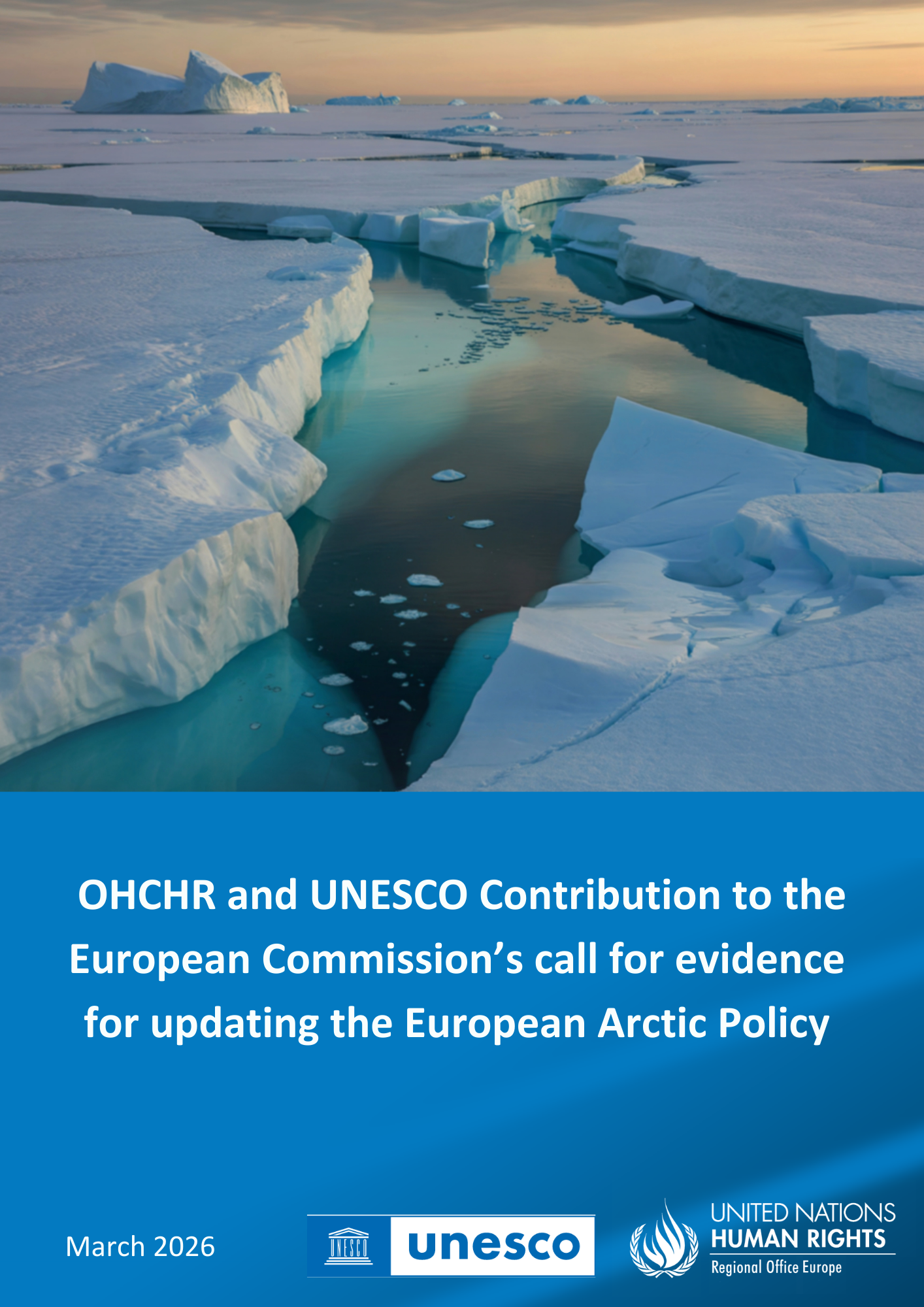
UN Human Rights, together with UNESCO (through its Liaison Office in Brussels and Representation to the EU), has submitted a contribution to the European Commission’s call for evidence on the update of the European Arctic Policy.
The contribution welcomes the opportunity to engage in this process and highlights the importance of further strengthening the human rights dimension of EU Arctic action.
The submission acknowledges the strong human rights language already present in the European Arctic Policy, including its reaffirmation of EU values such as the rule of law, human rights, gender equality, and respect for international law. It also welcomes the explicit recognition of the UN Declaration on the Rights of Indigenous Peoples and the commitment to promote Indigenous Peoples’ rights, including the principle of free, prior and informed consent (FPIC). At the same time, OHCHR and UNESCO note that the policy could further develop a clearer human rights-based approach, particularly in relation to the impacts of climate change and environmental degradation on people living in the Arctic.
To support a stronger integration of human rights in the updated policy, OHCHR and UNESCO put forward five key recommendations:
- Recognize the impact of climate change and environmental degradation on the enjoyment of human rights and address ways in which the EU as a legislator for part of the European Arctic can contribute to the protection of human rights.
- Ensure effective operationalization of the right to free, prior and informed consent (FPIC), as affirmed in the UN Declaration on the Rights of Indigenous Peoples and the current European Arctic Policy.
- Ensure the right to self-determination of the Indigenous Peoples living in Arctic area, including adequate recognition of the rights to their lands, territories and natural resources, as that recognition represents the cornerstone of their autonomy and self-government and is essential for their survival as distinct peoples.
- Ensure the prevention of human rights harms associated with military operations by adopting effective legal, policy, and early warning mechanisms and guarantee access to adequate, timely, and culturally appropriate remedies, including restitution, compensation, rehabilitation, and guarantees of non-repetition.
- Strengthen protection of human rights defenders, including environmental human rights defenders, by fostering a safe, supportive, and enabling environment in which they can operate freely and without fear of intimidation, harassment, or retaliation.
Read the full contribution to find out more.