
Anti-Racism
Racism and racial discrimination, xenophobia and related intolerance occur on a daily basis, hindering progress for millions of people around the world. Since the adoption of the Universal Declaration of Human Rights (1948) and the International Convention for the Elimination of all forms of Racial Discrimination (1965), the United Nations has worked against racism as a priority.
UN Human Rights provides extensive support to all the UN mechanisms involved against racism and works with them to make the Durban Declaration and Programme of Action a reality.
The Office coordinates the Programme of Activities for the International Decade for People of African Descent. And, since 2020, is mandated to coordinate the effective implementation of Human Rights Council resolution 43/1 towards transformative change for racial justice and equality.
Our work with the European Union
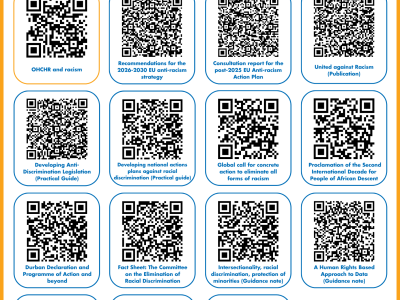
Anti-racism is at the heart of the work of the UN Human Rights EU Office, including against Africans and people of African descent, Roma and travelers, Muslims and Jewish people. We engage in awareness raising, including through an intersectional approach, opens consultation venues for civil society participation and support stakeholders on anti-racial discrimination and racial justice initiatives, including with focus on redress of racial trauma.
Our work in this area focuses on the following priorities:
- Contributing to the formulation and implementation of EU strategies and action plans related to racism, racial discrimination and related intolerances by mainstreaming human rights-based approach.
- Working with stakeholders, including EU institutions, Equality Bodies, civil society, academic institutions, selected member states, human rights cities networks, in strengthening their respective capacities for implementing and monitoring though data and indicators anti-racism actions and policies
- Raising awareness about the determinant role of racism on the implementation of social rights, particularly the right to health as well as the role of culture and education for redressing racism impact on victims.