

Digital Technologies and AI
Digital technologies provide new means to advocate for, defend, and exercise human rights and affect all types of rights - civil and political, as well as cultural, economic and social rights. As societies increasingly operate in digital environments, human rights protections must be ensured both online and offline.
UN Human Rights’ mandate also includes human rights as they relate to the use of digital technologies. It promotes a human rights-based approach to digital transformation by developing normative guidance, facilitating expert dialogue, and supporting States and stakeholders in aligning technology governance with international human rights standards.
Under the UN Global Digital Compact all States committed to anchor the governance of digital technology in human rights law and assigned the role of advising on that task to UN Human Rights. Through the Office's Advisory Service on Digital Technologies we provide tailored, independent and authoritative guidance to States and other stakeholders to align laws and regulatory efforts on digital technologies, including AI, with international human rights standards, available online.
Our work with the European Union
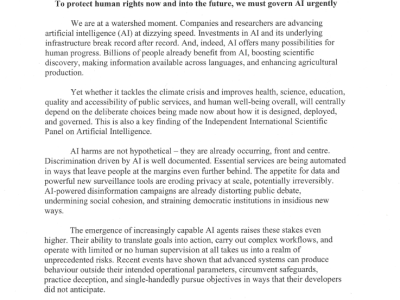


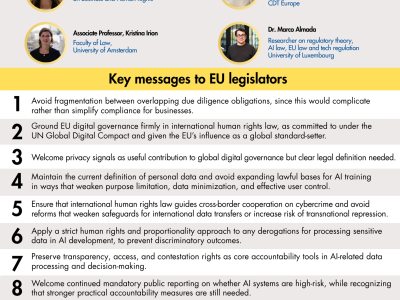


The protection of online civic space, and human rights in the digital age is a key priority for the UN Human Rights EU Office, which promotes a human rights-based approach to digital transformation by developing normative guidance, facilitating expert dialogue, and supporting States and stakeholders in aligning technology governance with international human rights standards. We engage closely with EU institutions and bodies to help realize the common goal that technology serves humanity.
The European Union is one of the leading entities in the world about tech regulation with laws in place on privacy (GDPR), artificial intelligence (EU AI Act) and platform governance (EU Digital Services Act) – to name but a few. Given the global reach of these laws, we have engaged in the process of their drafting and follow their implementation.
Our work in this area focuses on the following priorities:
- Strengthening platform governance frameworks.
- Supporting the regulation and oversight of artificial intelligence systems.
- Promoting the right to privacy in the digital age.