
Economic, Social and Cultural Rights
Economic, social and cultural rights (ESCR) include the rights to adequate food, to adequate housing, to education, to health, to social security, to take part in cultural life, to water and sanitation, and to work.
They were codified as legally binding obligations through the International Covenant on Economic, Social and Cultural Rights (ICESCR) and further elaborated in human rights treaties dedicated to protected groups.
The work of UN Human Rights to protect and promote ESCR includes:
- Conducting research and analysis.
- Providing technical guidance, policy support and capacity-building to Member States, national institutions, civil society, and UN partners in the area of ESCR.
- Supporting UN Human Rights mechanisms and engaging in key intergovernmental processes related to ESCR.
- Building partnerships with UN agencies, local governments, NHRIs and civil society to advance ESCR jointly.
The Office has developed a body of guidance and tools on ESCR, all of which can be found in the ESCR Knowledge Hub.
Our work with the European Union




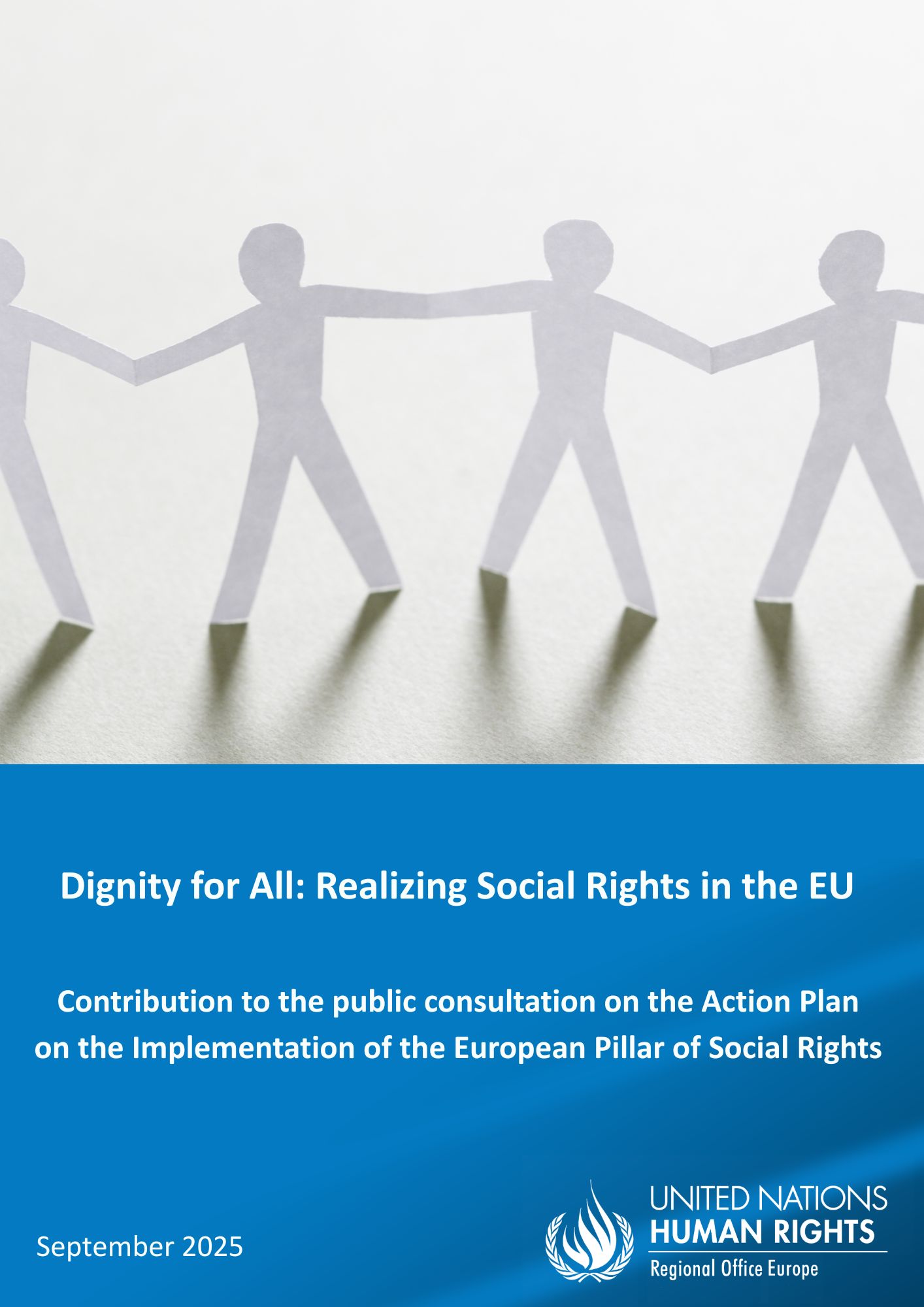
While social policy is primarily the responsibility of Member States, the EU has increased its focus on social rights over the past years, including through the adoption of the non-binding European Pillar of Social Rights and initiatives to support social inclusion, housing affordability and poverty alleviation across the Union.
The UN Human Rights EU Office engages closely with EU institutions, UN partners, civil society organizations and National Human Rights Institutes to promote human rights-based EU social- and housing policies, drawing from international human rights law and mechanisms.
Our work in this area focuses on the following priorities:
- Contributing to the formulation and implementation of EU strategies and action plans on economic and social rights grounded in human rights
- Advocating for leveraging the EU budget to advance economic, social and cultural rights
- Promoting a human rights-based approach to housing
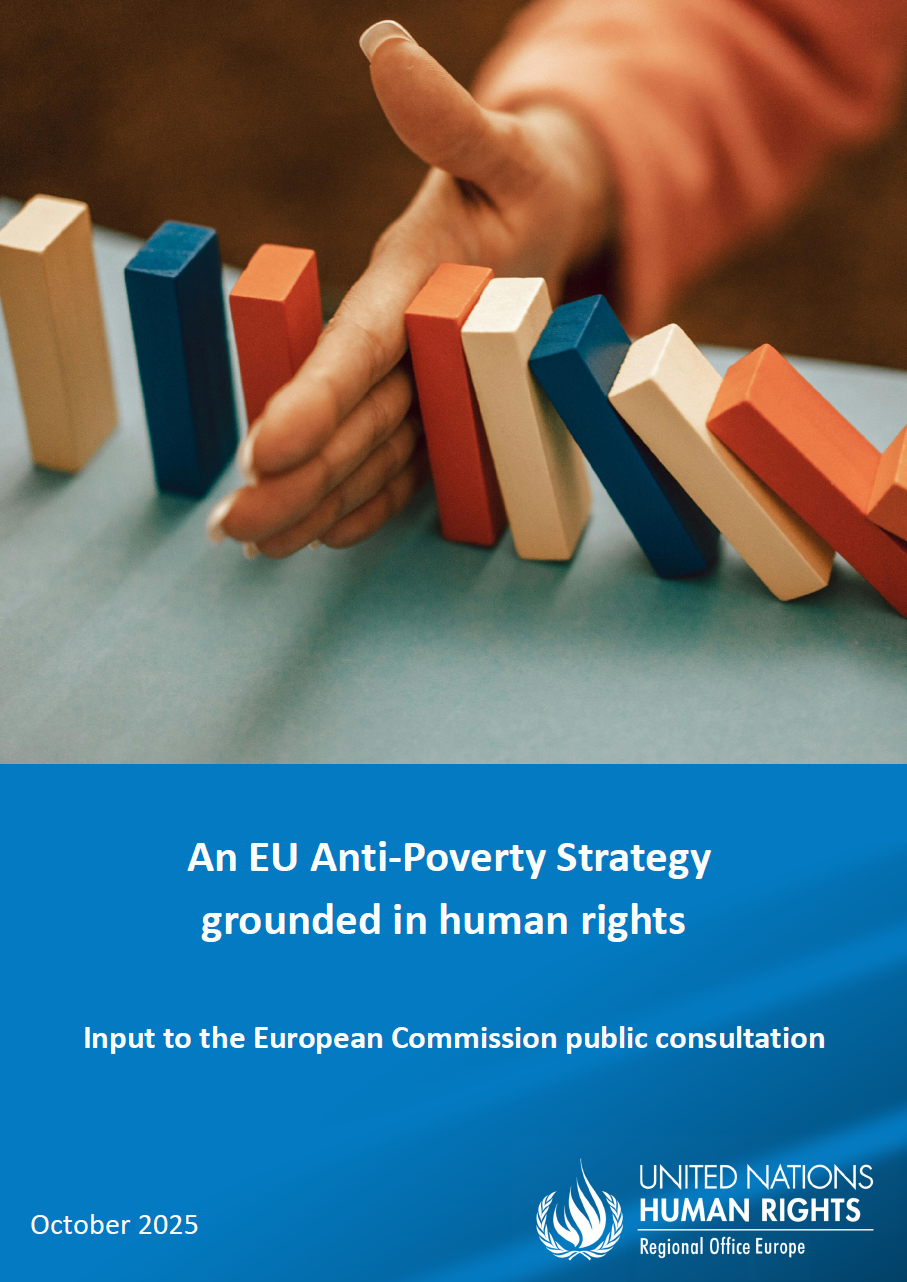
- Supporting the development of anti-poverty strategies grounded in human rights
- Integrating recommendations from UN human rights bodies into key EU social policy frameworks
- Supporting engagement of UN human rights mechanisms with European institutions